With contributions by: Jessica de Abreu, Radio AvA, Bar Bario, Francisco Camacho Herrera, Lisa Corcoran, Mijke van der Drift, Sierra Durgaram, Charles Goudsmit, The House of Hopelezz, Patricia Kaersenhout, Pennie Key, Pieter Koenders, Mokum Kraakt, Sandra Lange, YuJing Liu, Saman Mahdavi, Sands Murray-Wassink, Golrokh Nafasi, Nancy & Mercy, Tabea Nixdorff, Robel Sank, Fort van Sjakoo, Joy Mariama Smith, Taka Taka, Archival Textures, Ester Venema, John Wesly, Anisa Xhomaqi.
Editors: Joy Mariama Smith with Werker. Design: Werker with Vincent Becher.
An initiative by Werker Collective.
28 pages, 42 ✕ 29.7 cm, single color offset, with a poster by Sands Murray-Wassink. Languages: English, Dutch, Chinese.
Price: €7,00 (excl. shipping)
Dear queer body, deviant body, disabled body, crip body, racialized body, othered body, neurodivergent body, drag, migrant, sex worker, care worker, stigmatized body, polyamorous body, queer families, biracial body, cross-cultural body, non-normative body, insurgent body, non-binary body, transitioning body, aging body, asexual body, incarcerated body, trans body, queer child, body in protest,
One-third of discrimination reports nationwide concern sexual orientation, with over 10% of LGBTQIA+ people facing physical or sexual violence — rising to 17% for transgender and 22% for intersex individuals. Meanwhile, the rights of protesters, migrants, and asylum seekers in the city are increasingly diminished. As discrimination rises, especially for those with intersecting marginalized identities, collective action is essential to resist systemic oppression and the violence threatening our lives.
Which bodies live, are represented, or accepted in our city? Who regulates them, and why do some have more rights than others? How do we reclaim our bodies and desires? Nieuwe Nieuwsmarkt 2: Body Politics explores how Amsterdammers have fought for justice and autonomy, in the past and the present, aiming to contribute to a body language for collective emancipation, making Amsterdam a welcoming and safe city for us all.
and receive: NIEUWE NIEUWSMARKT ISSUE 1: HOUSING STRUGGLE (out now!) NIEUWE NIEUWSMARKT ISSUE 2: BODY POLITICS (out now!) NIEUWE NIEUWSMARKT ISSUE 3: RECLAIMING SOIL (spring 2026)
Price: €21,00 for 3 issues (excl. shipping)
and receive: NIEUWE NIEUWSMARKT ISSUE 2: BODY POLITICS (out now!) NIEUWE NIEUWSMARKT ISSUE 3: RECLAIMING SOIL (spring 2026)
Price: €14,00 for 2 issues (excl. shipping)
The experiences of non-normative bodies and sexualities remain too often silenced. BODY S.O.S. is an open archive of testimonies that aims to create a record of today’s body struggles in Amsterdam, from an inclusive and intersectional perspective. The collected testimonies can be of use for activist media, educational and research purposes, or as legal evidence.
What signals is your body giving you? Send us your testimonies, messages, laudations, complaints, desires, musing and more!
“Hey, does anybody have some spare hormones lying around?” — Anonymous
“The body as a dynamic assembly, the body as a porous and fluid collection of many different species, a carrier of rather than a self, the body as a perpetual state of non-belonging. The SOS signals transmitted are structurally ignored. A cadence of distress, those echoes pulsate through our connective tissue. Cells are rattled like microscopic maracas performing a hypnotic rhythm that folks have started to bop their heads to. The disconcerting muzak has become an all too familiar background noise that has lost the ability to communicate anguish. The repetition is powerful; it leaves no room for interruption or variation. It is able to lull us back to sleep. Whose bodies as collateral damage, or intended targets of a social structure? As it suppresses and over-expresses, the perpetual friction causes my body to go up in flames—the combustible body.” — Sandra
“I need: Tea time for a heart-to-heart? A supportive massage? A sauna party? Midnight junk food and a movie? A hug to sleep?” — Anonymous
“Lately, I have felt a deep discrepancy between the sensations of the body (the experience of being body) and the lack of language to talk about it.” — Anonymous
“My queer childhood was a terrifying time that has certainly left traces in my life as an adult. I remember I felt different from the majority of other kids at school, the gender roles that were available around me did not suit me. I didn’t ask for help. I was too afraid to tell my parents. I remember thinking: I am a child, I am not supposed to be sexually mature, this must be a phase, it will pass. The taboo around children’s sexuality in our society creates sexual desinformation for children that leaves them unprotected. Children are sexual beings and they need to have access to information to grow up knowing what they want and being able to make their own choices. Who cares for the queer child?” — Marguerite
“Through a one-on-one case of Feldenkrais, I was sexually harassed. In the social background of China, how did I seek help and practice self-defense? This includes how I later contacted the Feldenkrais headquarters to send the indictment and explored other ways to protect and save myself.” — Anonymous
“In 2013, a psychologist told my teenage-self to draw a tree on an A4 sheet. ‘Thick stem, roots spread wide, canopy consuming the page – You see! We must solely uncover your manhood — It’s there, this phase will pass.’ I breathe in defiance of their words. My body is a space of refusal, of care, of revolt. I am the undercommons. When I shit, I shit in defiance. Our body is where control is forced upon us, and it needs to be fought for to be free. It's also where we feel the state's violence the most. My sexuality was bound to the shape of a tree (!!!) in 2013, I really believed this shit back then.” — Daan
“Why is it so difficult to make an appointment at the GGD (Municipal Health Service) in Amsterdam to get tested for STDs in a city that is sex inciting like Amsterdam? They just refuse to test me if I’m not in some kind of incredible direct danger for having contracted HIV. Most of my friends have found it impossible to get tested too, for a longer period of time, which is incredibly dangerous to the health of polyamorous people in this city. Besides that, when you go through the form to get an appointment, they ask questions that are clearly racist; such as whether I had sexual contact with a person from Suriname, The Antillen or Aruba, Morocco, Africa (that’s a big continent baby!), Turkey, South- and Middle-America (another biggy), Eastern Europe, and ENTIRE Asia. How is it a good idea to ask this? It reeks of self-congratulatory policy. And if it’s so difficult to get an appointment in this city, they better add Amsterdam to this list of places!” — Frederik
“I smoke, I exist, I go to cruising bars. I have been drugged three times in these spaces of shadow. I have been smacked to the ground by a fascist in daylight so broad and bright that I’m missing my irregular metaphors here. Called words I won’t reproduce. At eighteen, I sold my body for porn, once. A body caught in the act of being seen. I am a vessel for all of this, you know. None of it was a choice.” — Anonymous
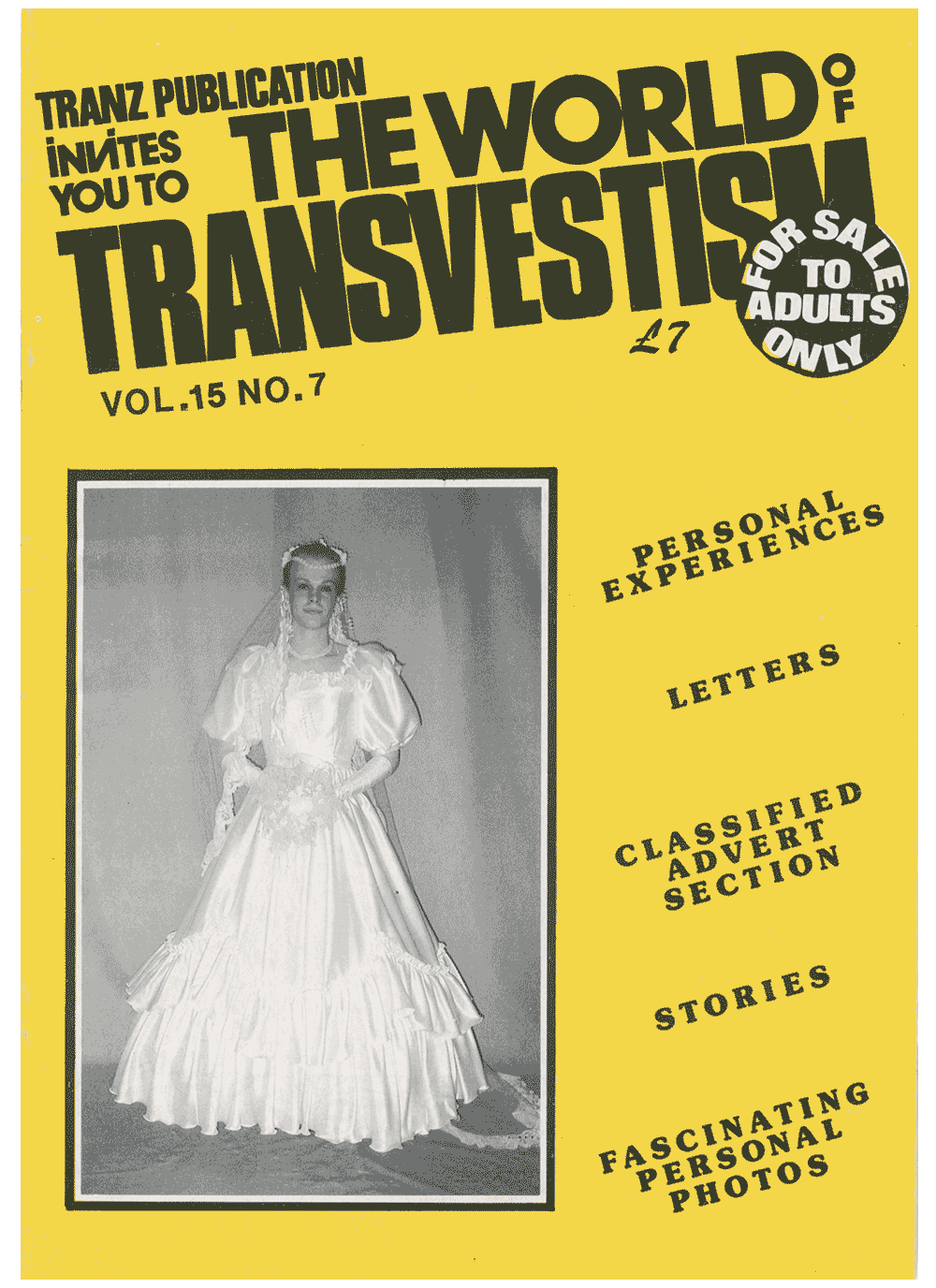
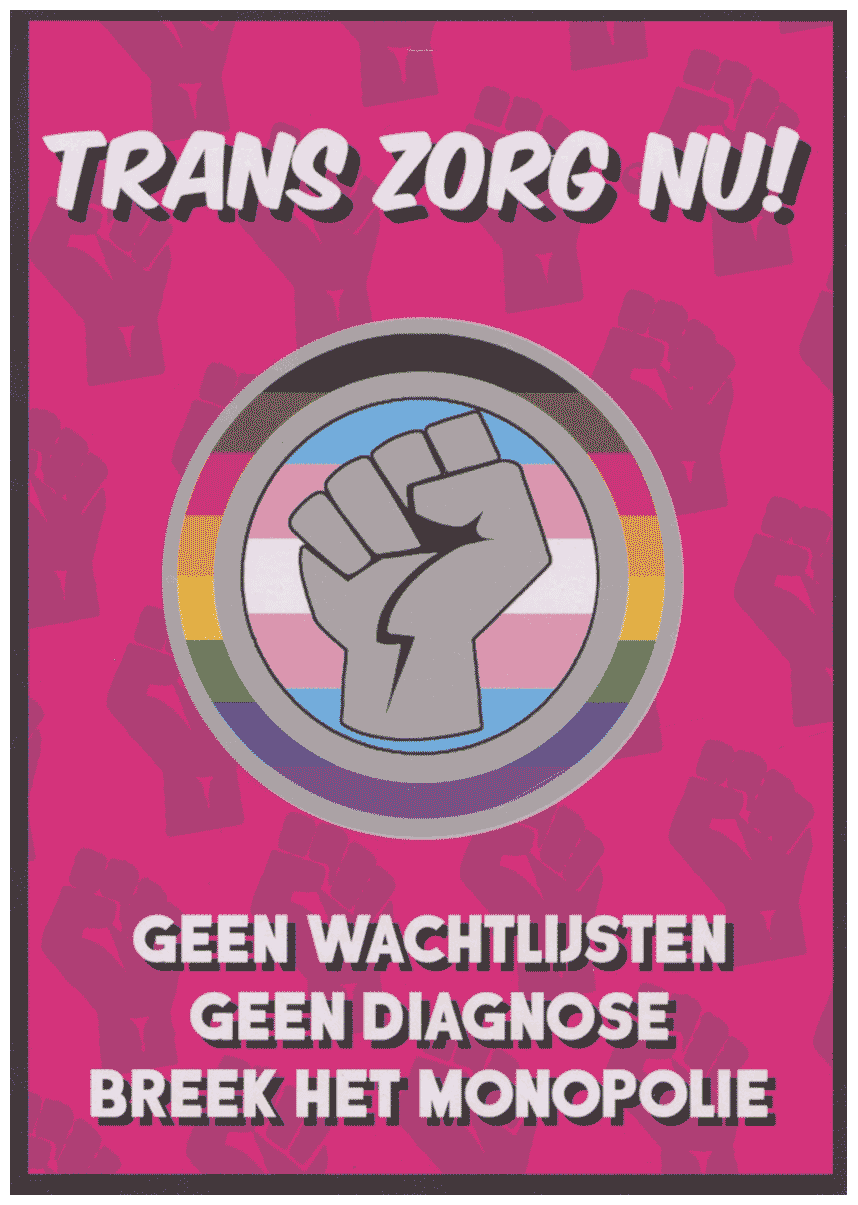
Werker began collecting documents and visual materials in 2009 with the mission of preserving and sharing the legacy of self-organized documentary practices. These materials originate from second-hand bookstores and flea markets, donations from friends and comrades, or are produced during the collective's artistic and activist collaborations. Over time, the initiative has grown into an archive of more than 3,000 historical and contemporary documents, which continues to expand. The archive is physically located in Amsterdam's Nieuwmarkt neighborhood and is regularly activated through conversations, workshops, performances, installations, and publications. For visits or inquiries, please email: info [at] werkercollective.net.
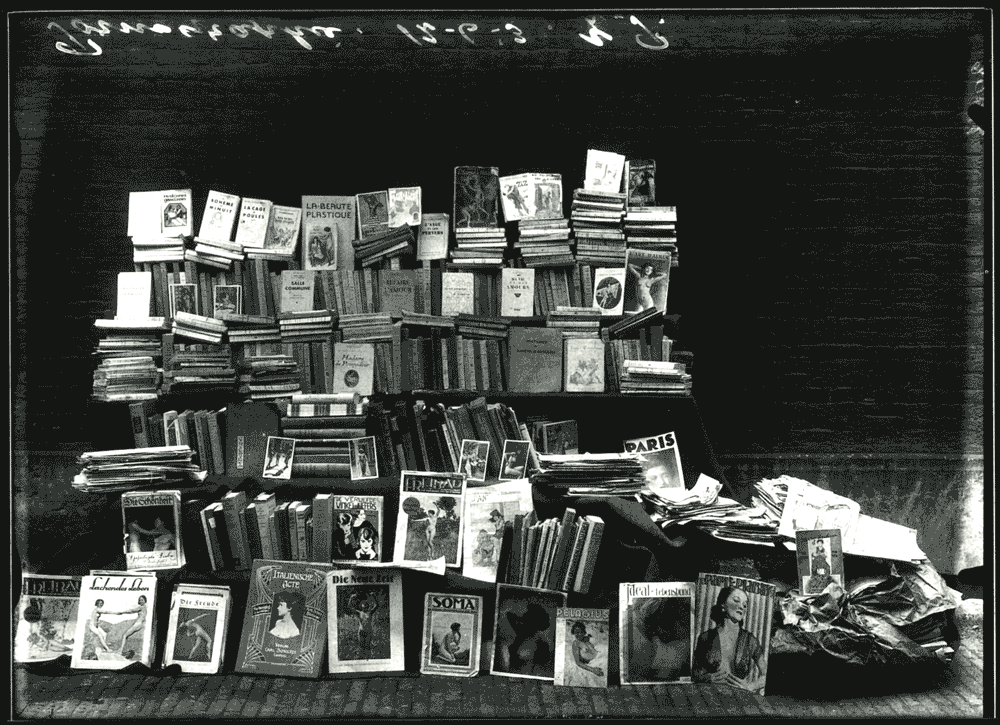
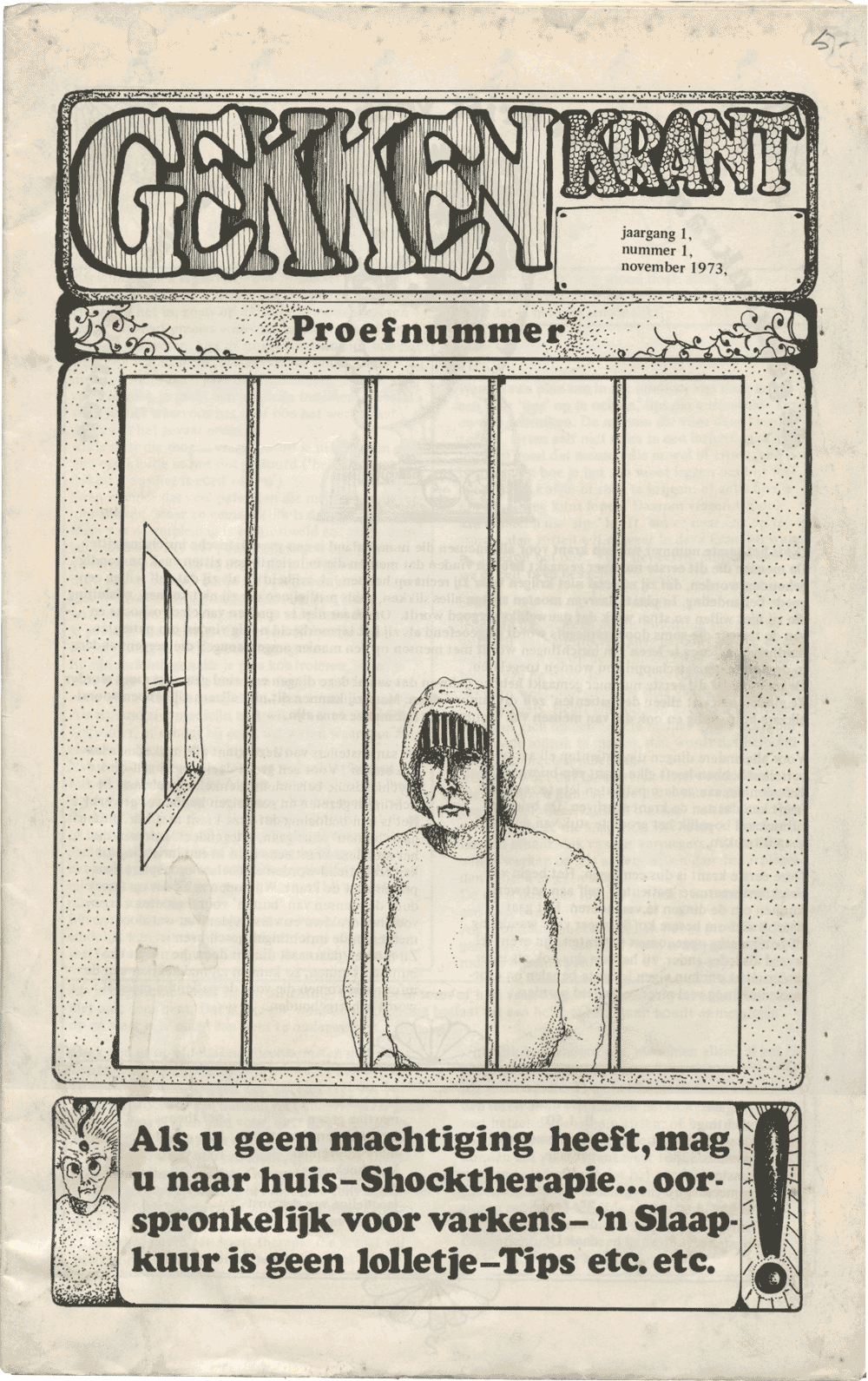
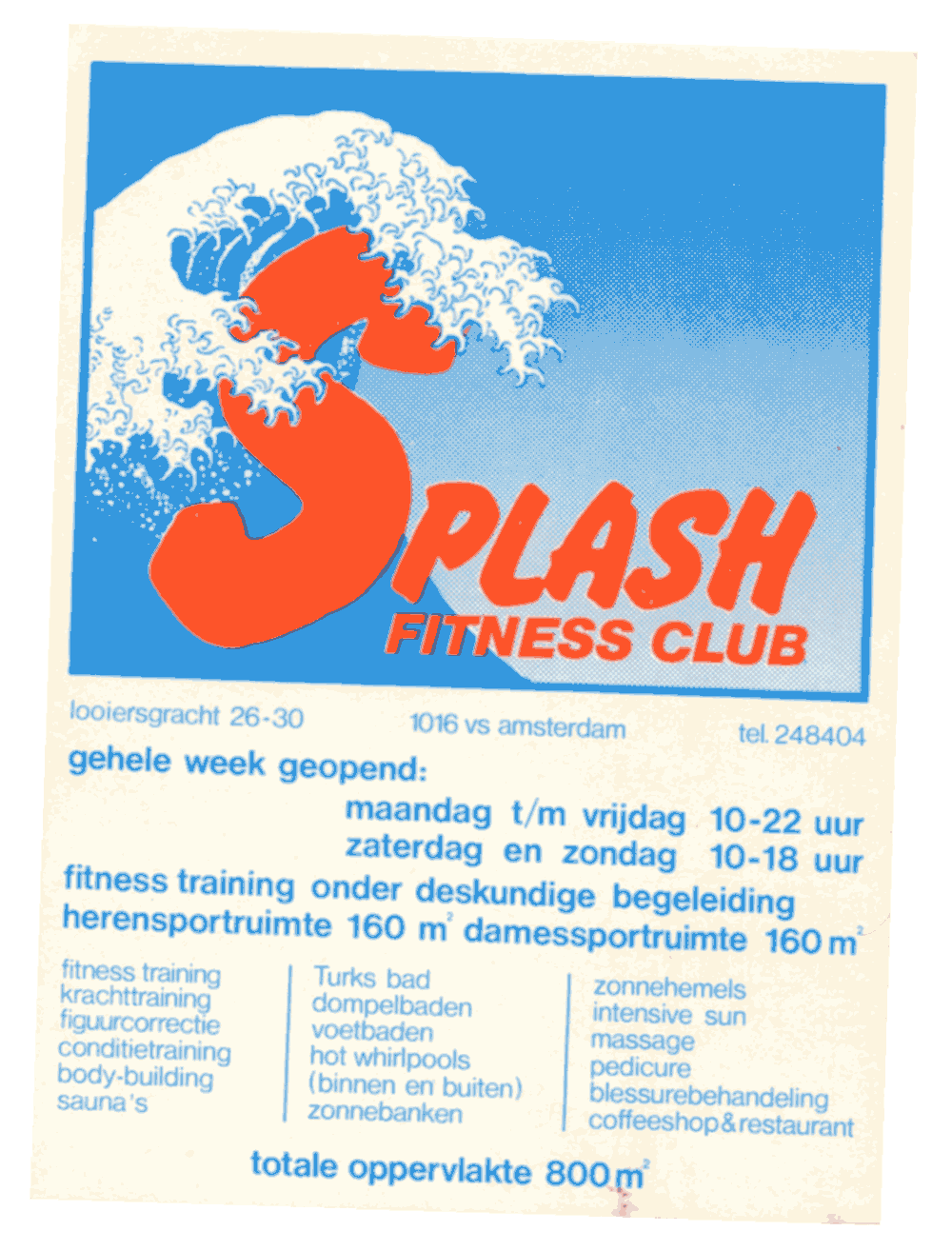
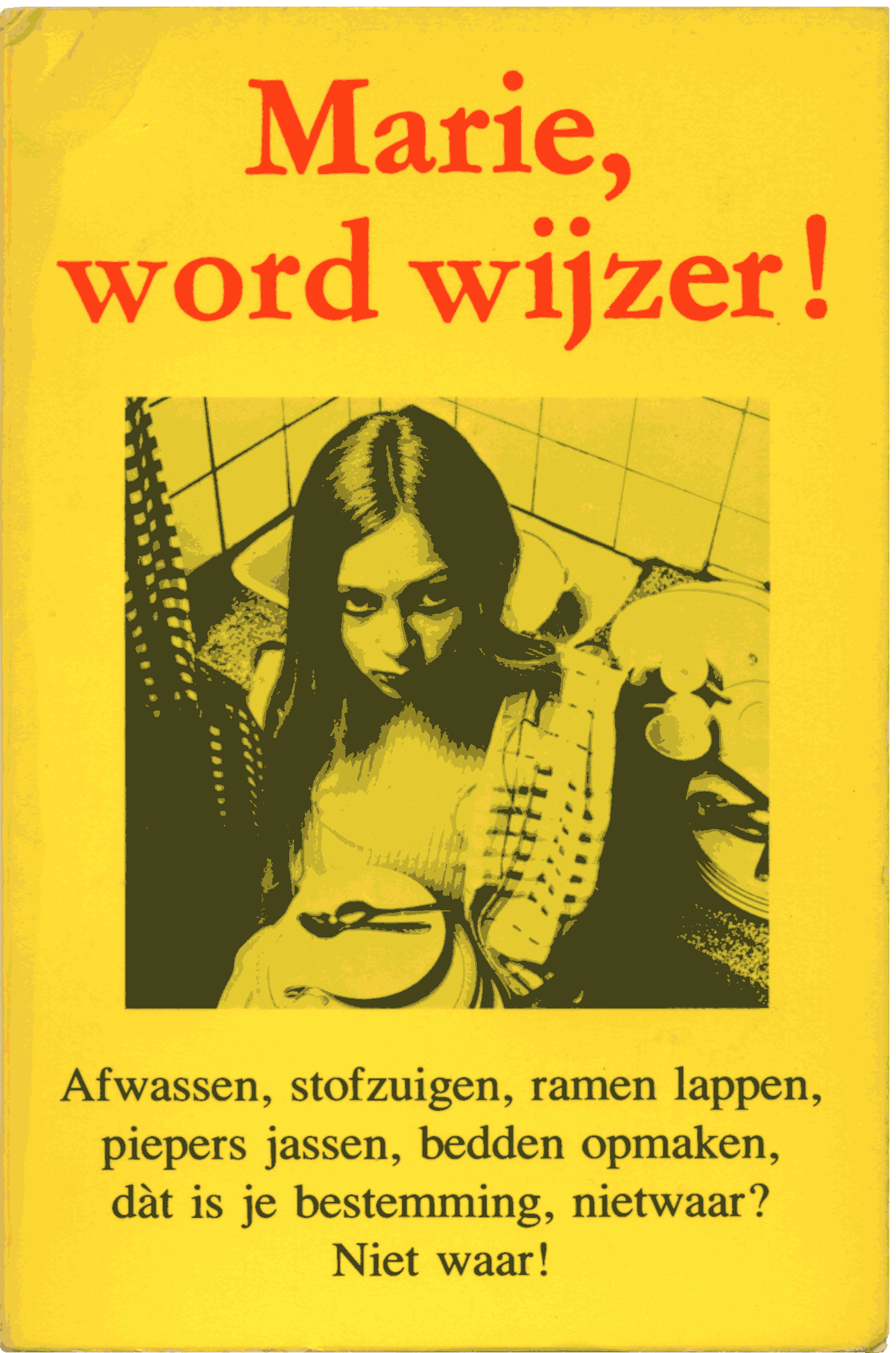
( A selection from AMATOR ARCHIVES : BODY POLITICS !!! )